

Marine battery manufacturer AYK Energy has signed a second contract with Spanish ship owner Mureloil, expanding the use of diesel-electric hybrid propulsion systems in the chemical tanker sector.
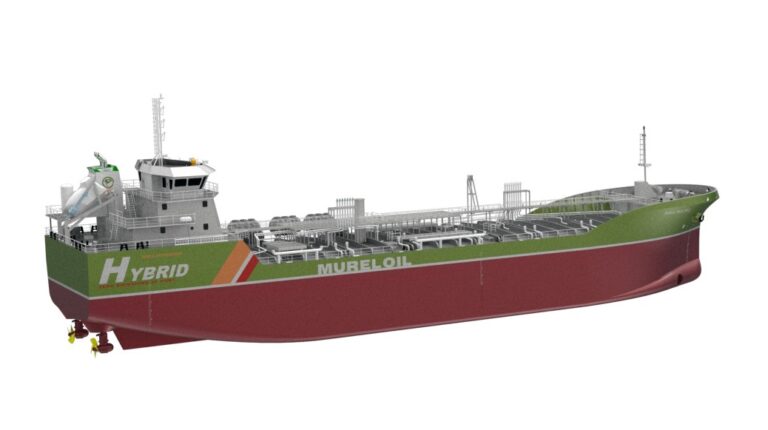
The agreement will see AYK Energy supply a 4.2MWh Aries+ battery system for Mureloil’s 8,000 DWT product tanker Bahía Beatriz, currently under construction at Astilleros de Murueta shipyard near Bilbao. The installation follows the successful deployment of an identical battery system on board the vessel’s sister ship, Bahía Candela.
While battery systems are now well established in ferry and workboat applications, AYK Energy is pioneering their use in chemical tankers. The two Mureloil vessels will be among the first tankers globally to operate on diesel-electric hybrid power, which is predicted to yield greenhouse gas emissions reductions of up to 50%. During port operations, the vessels will be capable of running on full electric power, eliminating local emissions entirely.
AYK Energy founder Chris Kruger said the latest deal was signed following a site visit to the company’s battery manufacturing facility in Zhuhai, China. He thanked Mureloil for its continued confidence in AYK’s technology and confirmed that AYK’s Spanish agent, Vulkan, will support installation of the system.
“The time for marine batteries has come,” said Kruger. “Although these vessels are hybrid diesel-electric, we are now seeing that the technology is there to go fully electric not just on ferries, OSVs and workboats, but also on tankers like these. Seeing batteries on tankers is a significant moment for electric power [in shipping].”
The two vessels will double Mureloil’s capacity to transport biofuels and methanol, strengthening the company’s position in the sustainable marine fuels market.
The battery systems will use lithium iron phosphate (LFP) chemistry, which AYK says offers higher safety and performance compared with the more commonly used nickel manganese cobalt (NMC) batteries.
“NMC has been the most commonly used battery chemistry because of its supposed greater density, but its chemistry is known to be much more dangerous than LFP,” said Kruger. “AYK is showing that LFP can outperform NMC and deliver greater energy density, higher safety and better value.”
The latest contract adds to AYK Energy’s current growth trajectory. Earlier this year, the company announced that its latest range of marine batteries had received type approval from DNV, a milestone Kruger said helps to democratize access to marine battery technology.
Demand for battery systems is also being driven by regulatory pressure on shipowners, including requirements under FuelEU Maritime and the EU Emissions Trading System.
“The regulatory squeeze is real,” Kruger said. “With the new sustainability reporting requirements, ship operators know they need affordable carbon cutting solutions like marine batteries that deliver.”
Related news, Wärtsilä fuel-flexible engines selected for two new pusher tugs in Brazil