


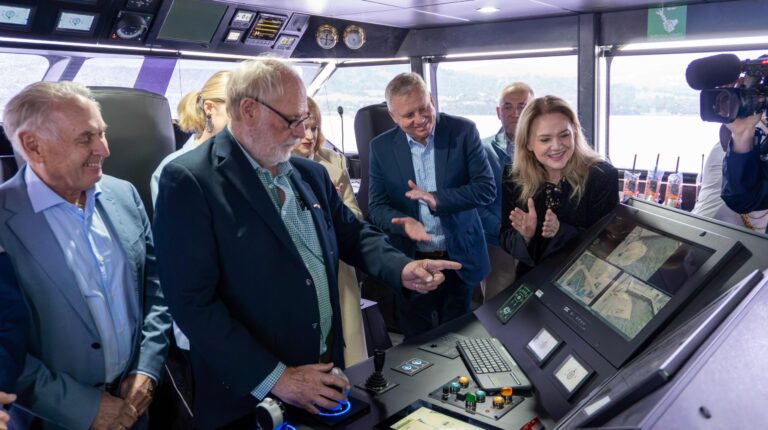
Incat Tasmania has powered up the largest battery-electric ship for the first time in Hobart, Tasmina.
The 130m vessel – known as Hull 096 – is the largest battery-electric ship ever constructed and the largest electric vehicle of any type currently in operation. Designed to carry up to 2,100 passengers and more than 220 vehicles, it represents the first time a ship of this size and capacity has operated solely on battery power.
The trial, which took place on on December 14, involved the activation of the ship’s waterjets and propulsion system, which together form the largest battery-electric propulsion installation ever fitted to a vessel.
Hull 096 is powered by an energy storage system weighing more than 250 metric tons and delivering over 40MWh of installed capacity. Incat says this is around four times larger than any previous maritime battery installation.
According to the company, the successful trial confirms the technical feasibility of full battery-electric propulsion at a scale previously considered impractical for large passenger and vehicle ferries. The vessel was designed and built in Hobart and forms part of a broader shift toward low-emission, high-capacity maritime transport.
Incat chairman Robert Clifford said the trial marked a significant moment for the shipbuilder and the wider industry: “This is the first time a ship of this size, anywhere in the world, has been trialled under 100% battery-electric propulsion. It’s a remarkable achievement by our workforce and a turning point for shipbuilding.”
Clifford added that Tasmania’s long history in aluminum shipbuilding had positioned it well for the transition to sustainable vessels. “Today’s milestone shows we are now leading the world in the next era – sustainable, high-performance vessels at scale,” he said.
The trial was the first in a planned series of tests ahead of the ferry’s departure for South America in the coming months, where it is expected to enter service following further commissioning and sea trials.
Take a look inside the battery room of Hull 096, and at the Incat shipyard already at work on the next electrified vessels, in the January 2026 issue of Electric & Hybrid Marine Technology International.