


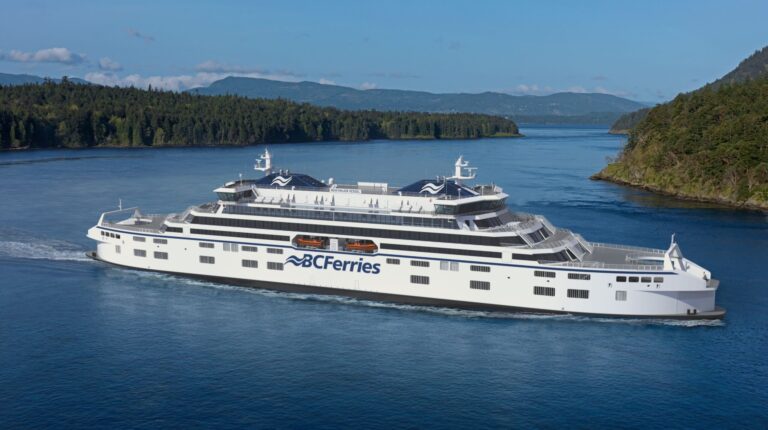
ABB has been selected to provide integrated power, propulsion and control technology for four new hybrid electric ferries being built for BC Ferries as part of its New Major Vessels program.
The double-ended passenger and car ferries will replace four vessels reaching end of life and are intended to reduce emissions and underwater radiated noise (URN) in the Strait of Georgia. The order was booked in the fourth quarter of 2025, with deliveries scheduled by 2030 from China Merchants’ Weihai shipyard. Financial terms have not been disclosed.
ABB will supply a full electric power and propulsion package, including its Azipo gearless, steerable electric propulsion system. The company said the design has fewer moving parts than conventional mechanical thrusters and includes a propeller optimized to reduce URN, which is a concern for the region’s marine life, including the endangered Southern Resident killer whale.
The vessels will also use ABB’s Onboard DC Grid power distribution system, designed to reduce energy conversion losses and improve overall efficiency compared with traditional AC-based propulsion systems.
Each ferry will be equipped to support up to 70MWh of battery energy storage, enabling hybrid operation using batteries alongside generators running on biofuel or renewable diesel. The configuration is intended to allow a future transition to fully electric, zero-emission operation as shoreside infrastructure develops.
According to ABB, the vessels will be capable of connecting to shore charging systems rated above 60MW, allowing rapid charging during port calls. The company said this capacity supports fast turnaround times and enables full electric operation on certain routes.
Digital monitoring and control systems supplied by ABB will provide crews with real-time operational oversight, with the aim of improving energy management and operational efficiency.
“BC Ferries’ New Major Vessels represent the largest capital investment in our history and are essential to renewing our fleet, increasing capacity on our busiest routes and strengthening system resilience,” said Nicolas Jimenez, the president and CEO of BC Ferries. He added that the vessels are designed to operate on hybrid power initially, and transition to full electrification over time.
Rune Braastad, the president of ABB’s Marine & Ports division, said the project supports BC Ferries’ emissions reduction goals and British Columbia’s broader transportation climate targets. “ABB’s deep roots in Canada make it possible to support generational infrastructure projects like the New Major Vessels,” he added.
In related news, commissioning is complete for Singapore’s first fully electric tug